

Our research areas
Our research areas
Our research areas
Our research areas
Resilience and crisis management
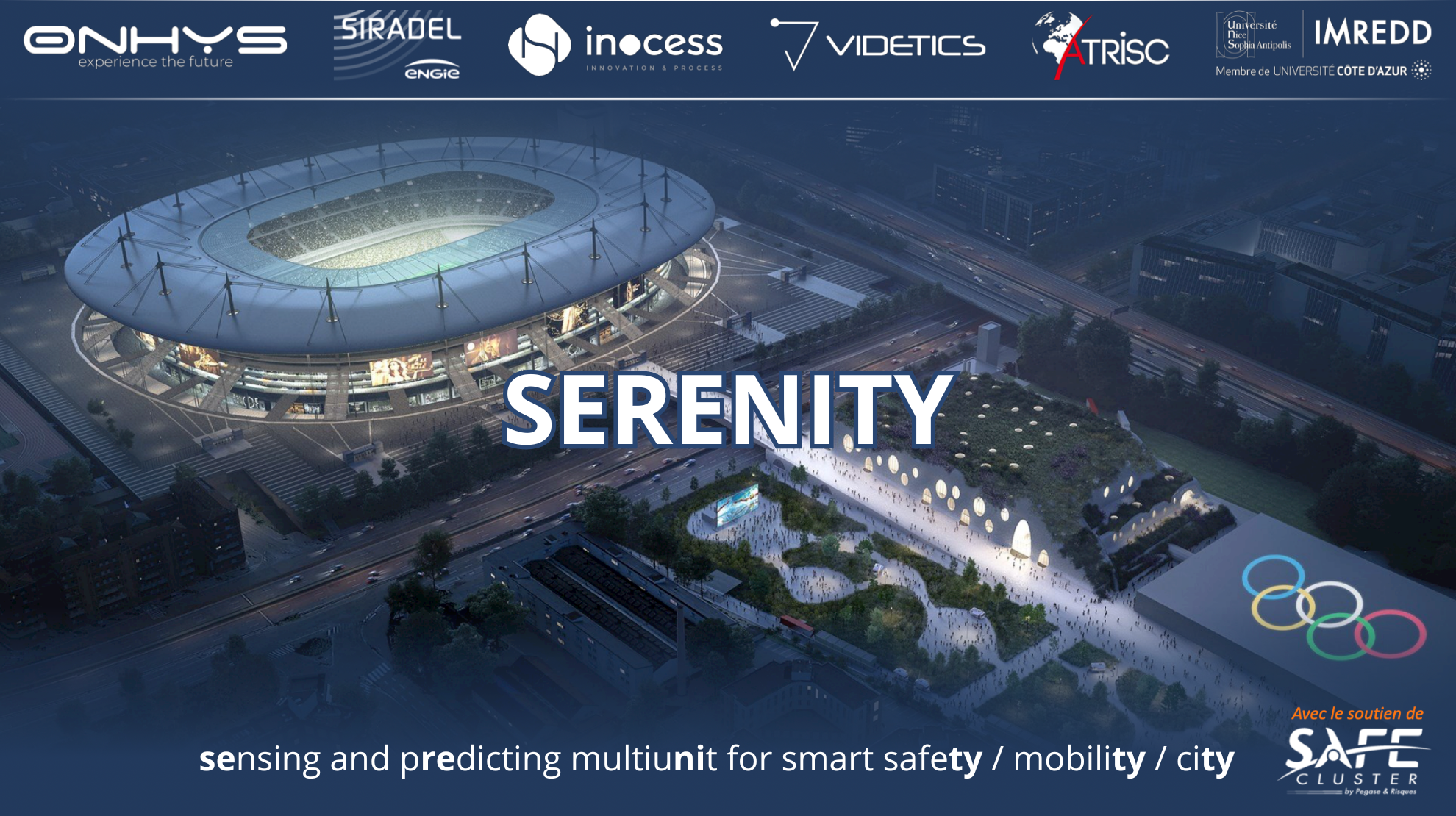
Project SERENITY : 2023-2025
SERENITY supports regions and infrastructure operators facing the challenges of urban safety, resilience and environmental responsibility, by optimising multimodal flows. The technologies deployed include AI and the creation of digital twins.
Cap4 Multi-Can'Alert
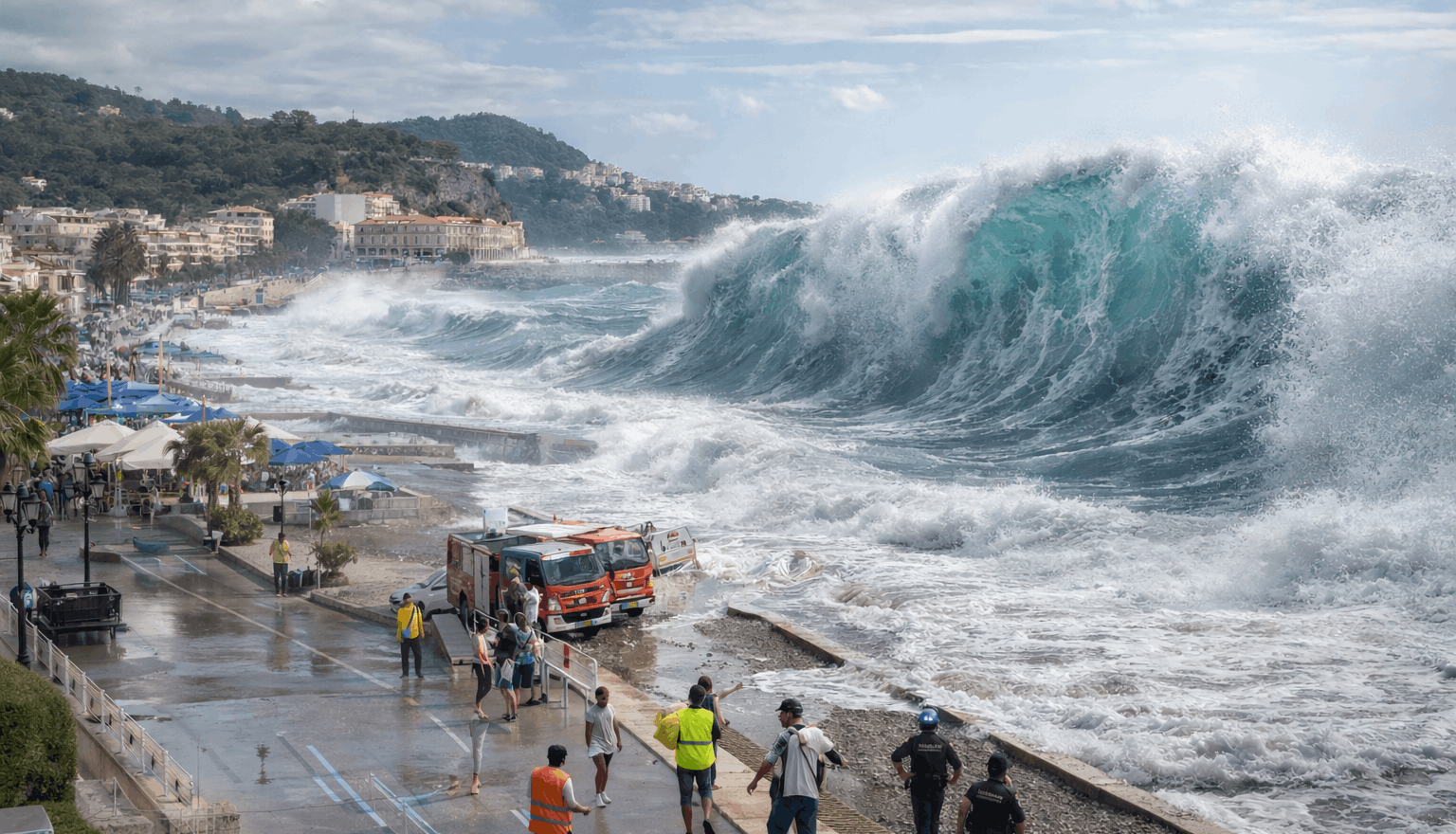
Research on optimising alerts and evacuation arrangements following a tsunami along the French Mediterranean coast (2025).
Some of the partners : Avignon University / UMR ESPACE 7300 CNRS ;
University of Nîmes / EA CHROME ; F24
Further information : https://capalert.univ-avignon.fr/
Strategic and foresight studies (CHEMI)
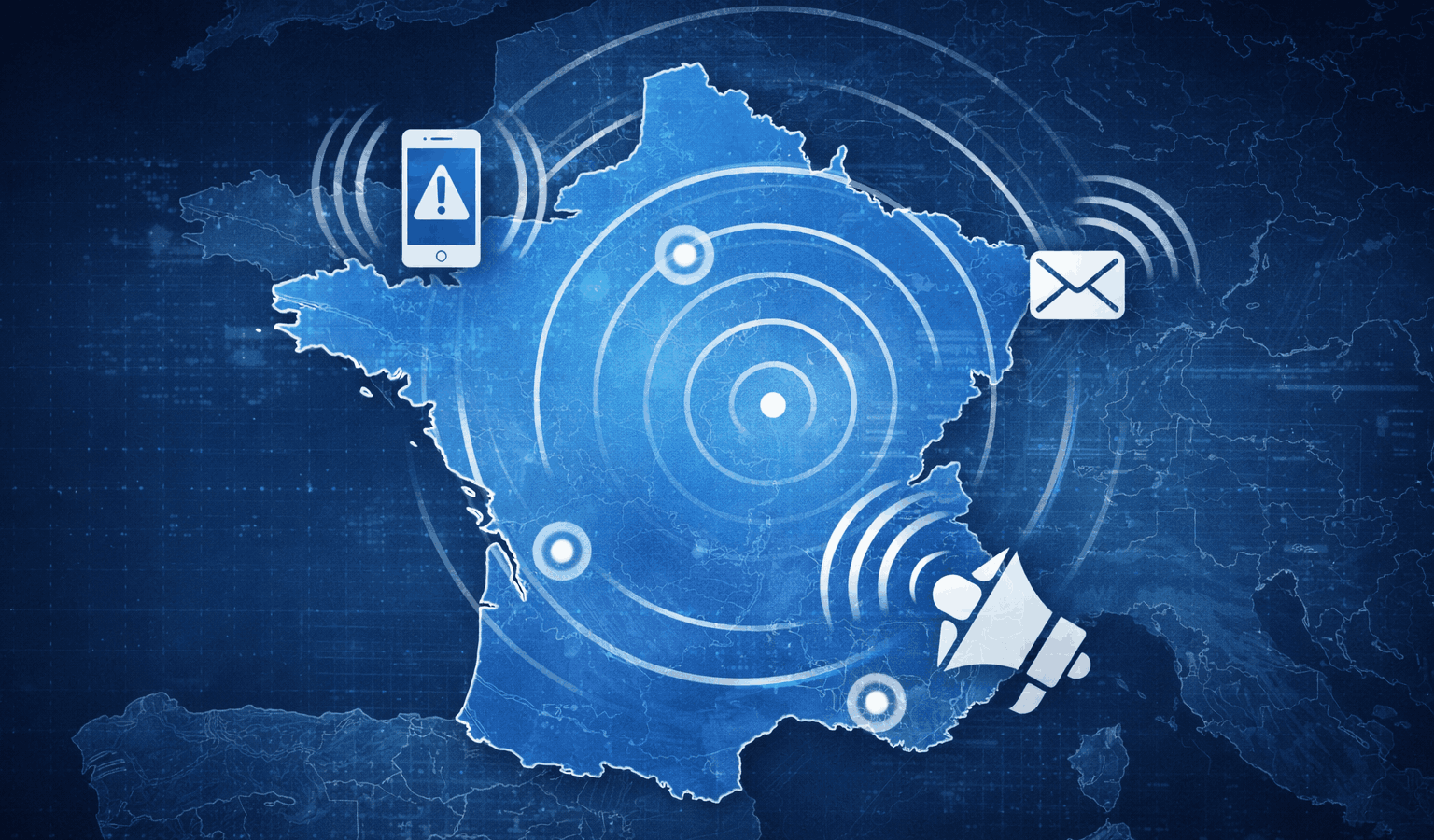
Strategic and foresight study for the Centre for Advanced Studies of the French Ministry of the Interior (CHEMI) designed to define the ideal public alert system by 2024.
Some of the partners : Avignon University / UMR ESPACE 7300 CNRS ; University of Nîmes / EA CHROME

H2020 European research project: InfraStress 2019-2021
Bringing together 27 countries, the H2020 InfraStress research project aims to improve the resilience of critical infrastructure exposed to threats.
It also seeks to ensure the continuity of operations while minimising the consequences for the infrastructure, the environment and local residents.
Some of the partners : ENG ; MOTOR OIL ; PETROL ; LUKA KOPER ; DIN
ANR research project MACIV 2018-2021
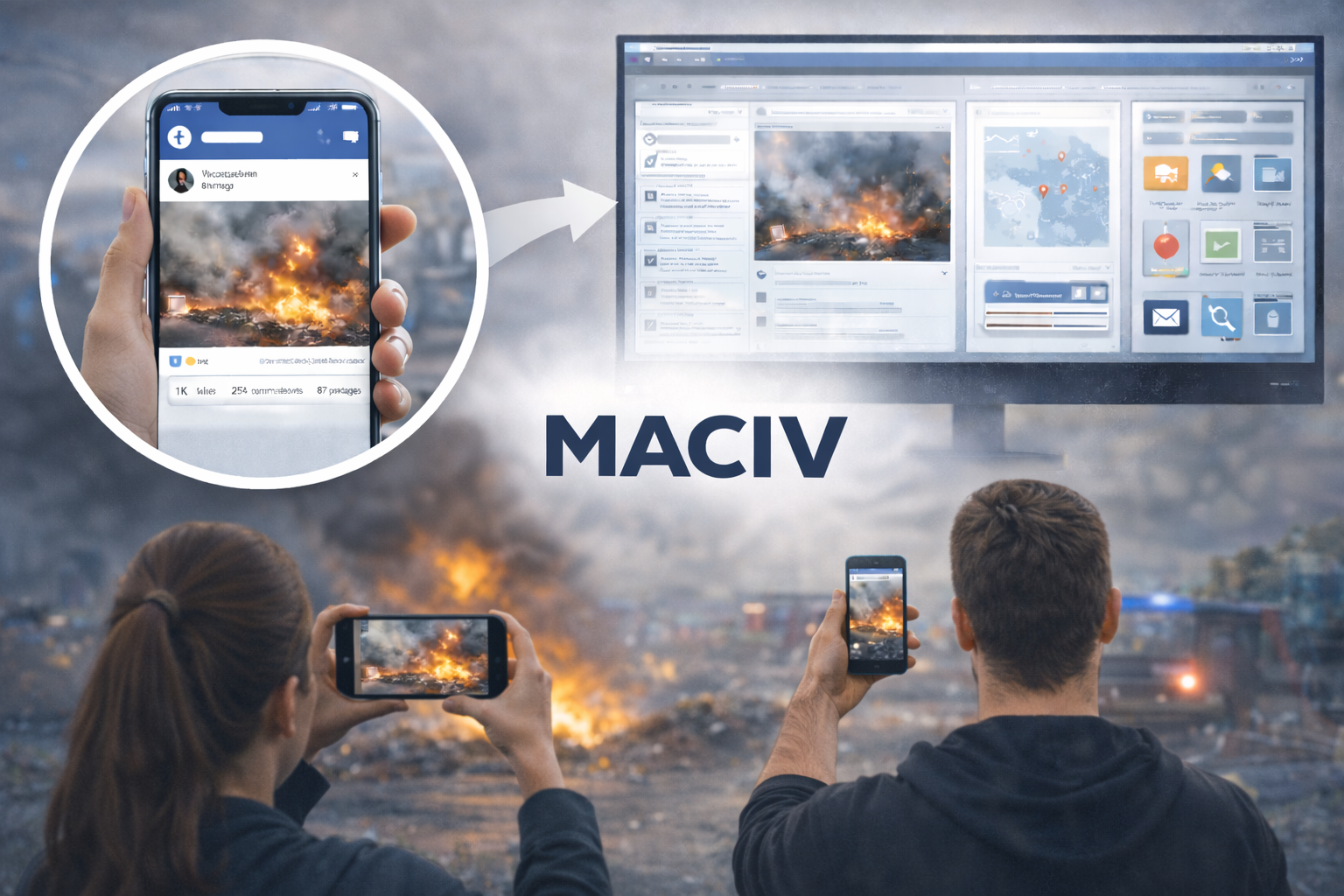
MACIV studies information flows and citizen initiatives on social media during major events, in order to help crisis management professionals incorporate them concretely into their practice. The project draws on field observation (real crises and exercises) and on the analysis of social media data.
It also contributed to the development of a module within the R-IOSuite platform, making it possible to extract relevant information automatically (tweets, for example) and to better characterise citizen initiatives so that they can be more easily taken into account in the operational response.
Some of the partners : INSTITUT MINES-TÉLÉCOM - PARISTECH ; General Secretariat of the Defence and Security Zone – Paris Police Prefecture ; VISOV ; SDIS 83
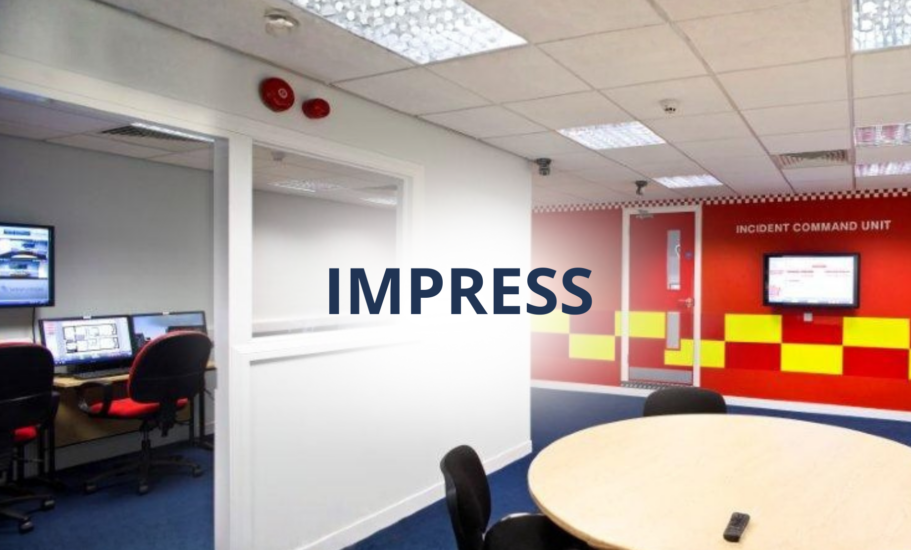
IMPRESS European research project : 2018-2021
The IMPRESS project aims to strengthen crisis management training and exercise capabilities among research centres and civil protection forces in Serbia.
It is based on the integration of simulation platforms and on supporting institutional stakeholders in taking ownership of them.
The objective is to support skills development within organisations through teaching arrangements suited to operational contexts.
Some of the partners : Academy of Criminalistic and Police Studies ; Steinbeis Advanced Risk Technologies Institute ; The Main School of Fire Service
H2020 European research project REACHING OUT : 2016-2020
REACHING OUT aims to improve the deployment and coordination of European civil protection forces during crises occurring outside European territory.
The project focuses in particular on deployment preparation, information sharing and operational effectiveness in the field, in order to strengthen responsiveness and the continuity of action in emergency situations.
Some of the partners : AIRBUS Defence and Space ; RINICOM ; IRSN ; French Ministry of the Interior ; European Union Satellite Centre
H2020 European research project TARGET : 2015-2018
The H2020 European research project TARGET aims to develop training platforms for civil protection forces, based on augmented and virtual reality.
Within this framework, ATRISC is designing a tool to measure collective performance in real time during the management of unexpected situations..
Some of the partners : Cleveland Fire Authority ; École Nationale Supérieure de Police ; FRAUNHOFER IVI ; ISPC ; Fachhochschule der Polizei des Landes Brandenburg ; German Police University ; Ministerio del Interior (Guardia Civil)
Resilience and crisis management
Project SERENITY : 2023-2025
SERENITY supports regions and infrastructure operators facing the challenges of urban safety, resilience and environmental responsibility, by optimising multimodal flows. The technologies deployed include AI and the creation of digital twins.
Cap4 Multi-Can’Alert
Research on optimising alerts and evacuation arrangements following a tsunami along the French Mediterranean coast (2025).
Partners : Avignon University / UMR ESPACE 7300 CNRS ; University of Nîmes / EA CHROME ; F24
Further information : https://capalert.univ-avignon.fr/
Strategic and foresight studies (CHEMI)
Strategic and foresight study for the Centre for Advanced Studies of the French Ministry of the Interior (CHEMI) designed to define the ideal public alert system by 2024.
Partners : Avignon University / UMR ESPACE 7300 CNRS ; University of Nîmes / EA CHROME
H2020 European research project: InfraStress 2019-2021
Bringing together 27 countries, the H2020 InfraStress research project aims to improve the resilience of critical infrastructure exposed to threats.
It also seeks to ensure the continuity of operations while minimising the consequences for the infrastructure, the environment and local residents.
Some of the partners : ENG ; MOTOR OIL ; PETROL ; LUKA KOPER ; DIN
ANR research project MACIV 2018-2021
MACIV studies information flows and citizen initiatives on social media during major events, in order to help crisis management professionals incorporate them concretely into their practice.
The project draws on field observation (real crises and exercises) and on the analysis of social media data.
It also contributed to the development of a module within the R-IOSuite platform, making it possible to extract relevant information automatically (tweets, for example) and to better characterise citizen initiatives so that they can be more easily taken into account in the operational response.
Some of the partners : INSTITUT MINES-TÉLÉCOM - PARISTECH ; General Secretariat of the Defence and Security Zone – Paris Police Prefecture ; VISOV ; SDIS 83
IMPRESS European research project : 2018-2021
The IMPRESS project aims to strengthen crisis management training and exercise capabilities among research centres and civil protection forces in Serbia.
It is based on the integration of simulation platforms and on supporting institutional stakeholders in taking ownership of them.
The objective is to support skills development within organisations through teaching arrangements suited to operational contexts.
Some of the partners : Academy of Criminalistic and Police Studies ; Steinbeis Advanced Risk Technologies Institute ; The Main School of Fire Service
H2020 European research project REACHING OUT : 2016-2020
REACHING OUT aims to improve the deployment and coordination of European civil protection forces during crises occurring outside European territory.
The project focuses in particular on deployment preparation, information sharing and operational effectiveness in the field, in order to strengthen responsiveness and the continuity of action in emergency situations.
Some of the partners : AIRBUS Defence and Space ; RINICOM ; IRSN ; French Ministry of the Interior ; European Union Satellite Centre
H2020 European research project TARGET : 2015-2018
The H2020 European research project TARGET aims to develop training platforms for civil protection forces, based on augmented and virtual reality.
Within this framework, ATRISC is designing a tool to measure collective performance in real time during the management of unexpected situations..
Some of the partners : Cleveland Fire Authority ; École Nationale Supérieure de Police ; FRAUNHOFER IVI ; ISPC ; Fachhochschule der Polizei des Landes Brandenburg ; German Police University ; Ministerio del Interior (Guardia Civil)
Resilience and crisis management
Project SERENITY : 2023-2025
SERENITY supports regions and infrastructure operators facing the challenges of urban safety, resilience and environmental responsibility, by optimising multimodal flows. The technologies deployed include AI and the creation of digital twins.
Cap4 Multi-Can’Alert
Research on optimising alerts and evacuation arrangements following a tsunami along the French Mediterranean coast (2025).
Partners : Avignon University / UMR ESPACE 7300 CNRS ; University of Nîmes / EA CHROME ; F24
Further information : https://capalert.univ-avignon.fr/
Strategic and foresight studies (CHEMI)
Strategic and foresight study for the Centre for Advanced Studies of the French Ministry of the Interior (CHEMI) designed to define the ideal public alert system by 2024.
Partners : Avignon University / UMR ESPACE 7300 CNRS ; University of Nîmes / EA CHROME
H2020 European research project: InfraStress 2019-2021
Bringing together 27 countries, the H2020 InfraStress research project aims to improve the resilience of critical infrastructure exposed to threats.
It also seeks to ensure the continuity of operations while minimising the consequences for the infrastructure, the environment and local residents.
Some of the partners : ENG ; MOTOR OIL ; PETROL ; LUKA KOPER ; DIN
ANR research project MACIV 2018-2021
MACIV studies information flows and citizen initiatives on social media during major events, in order to help crisis management professionals incorporate them concretely into their practice.
The project draws on field observation (real crises and exercises) and on the analysis of social media data.
It also contributed to the development of a module within the R-IOSuite platform, making it possible to extract relevant information automatically (tweets, for example) and to better characterise citizen initiatives so that they can be more easily taken into account in the operational response.
Some of the partners : INSTITUT MINES-TÉLÉCOM - PARISTECH ; General Secretariat of the Defence and Security Zone – Paris Police Prefecture ; VISOV ; SDIS 83
IMPRESS European research project : 2018-2021
The IMPRESS project aims to strengthen crisis management training and exercise capabilities among research centres and civil protection forces in Serbia.
It is based on the integration of simulation platforms and on supporting institutional stakeholders in taking ownership of them.
The objective is to support skills development within organisations through teaching arrangements suited to operational contexts.
Some of the partners : Academy of Criminalistic and Police Studies ; Steinbeis Advanced Risk Technologies Institute ; The Main School of Fire Service
H2020 European research project REACHING OUT : 2016-2020
REACHING OUT aims to improve the deployment and coordination of European civil protection forces during crises occurring outside European territory.
The project focuses in particular on deployment preparation, information sharing and operational effectiveness in the field, in order to strengthen responsiveness and the continuity of action in emergency situations.
Some of the partners : AIRBUS Defence and Space ; RINICOM ; IRSN ; French Ministry of the Interior ; European Union Satellite Centre
H2020 European research project TARGET : 2015-2018
The H2020 European research project TARGET aims to develop training platforms for civil protection forces, based on augmented and virtual reality.
Within this framework, ATRISC is designing a tool to measure collective performance in real time during the management of unexpected situations..
Some of the partners : Cleveland Fire Authority ; École Nationale Supérieure de Police ; FRAUNHOFER IVI ; ISPC ; Fachhochschule der Polizei des Landes Brandenburg ; German Police University ; Ministerio del Interior (Guardia Civil)
Detection of weak signals preceding a crisis
Detection of weak signals preceding a crisis
Detection of weak signals preceding a crisis
The impact of AI on risk and crisis management
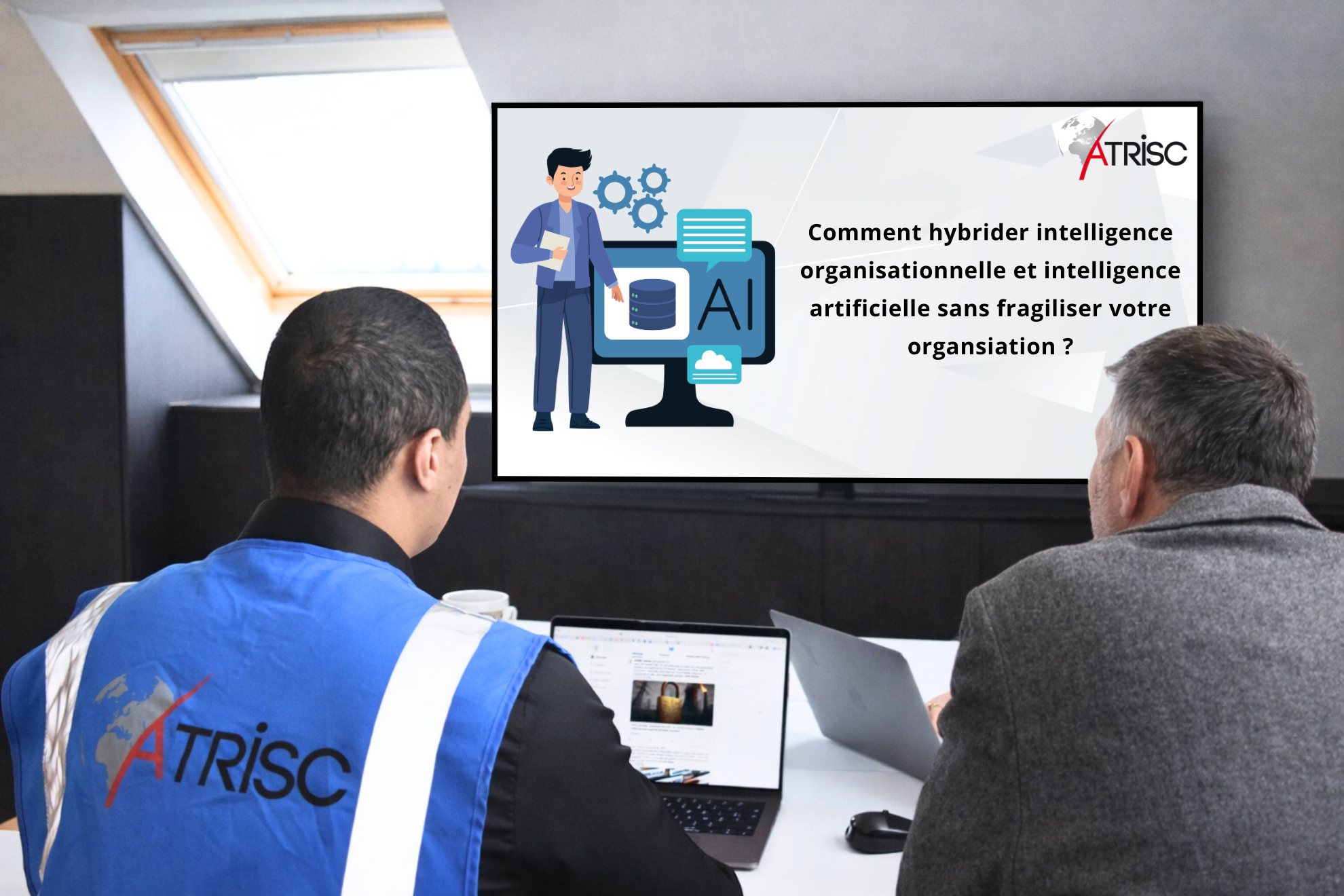
The integration of artificial intelligence opens up interesting prospects: increased productivity, better-informed decisions, automation of repetitive tasks.
But a 2025 MIT study* reveals that 95% of generative AI projects fail. Why? Because AI is not simply a technological tool: it disrupts the organisation and its cultureIn a number of cases, it increases psychosocial risks and even reduces resilience.
We have therefore developed an approach to help organisations combine organisational intelligence with artificial intelligence, without weakening themselves in the process.
(*)The GenAI Divide: State of AI in Business 2025, project NANDA (MIT Media Lab)
The impact of AI on risk and crisis management
The integration of artificial intelligence opens up interesting prospects: increased productivity, better-informed decisions, automation of repetitive tasks.
But a 2025 MIT study* reveals that 95% of generative AI projects fail. Why? Because AI is not simply a technological tool: it disrupts the organisation and its cultureIn a number of cases, it increases psychosocial risks and même reduces resilience.
We have therefore developed an approach to help organisations combine organisational intelligence with artificial intelligence, without weakening themselves in the process.
(*)The GenAI Divide: State of AI in Business 2025, project NANDA (MIT Media Lab)
The impact of AI on risk and crisis management
The integration of artificial intelligence opens up interesting prospects: increased productivity, better-informed decisions, automation of repetitive tasks.
But a 2025 MIT study* reveals that 95% of generative AI projects fail. Why? Because AI is not simply a technological tool: it disrupts the organisation and its cultureIn a number of cases, it increases psychosocial risks et même reduces resilience.
We have therefore developed an approach to help organisations combine organisational intelligence with artificial intelligence, without weakening themselves in the process.
(*)The GenAI Divide: State of AI in Business 2025, project NANDA (MIT Media Lab)